
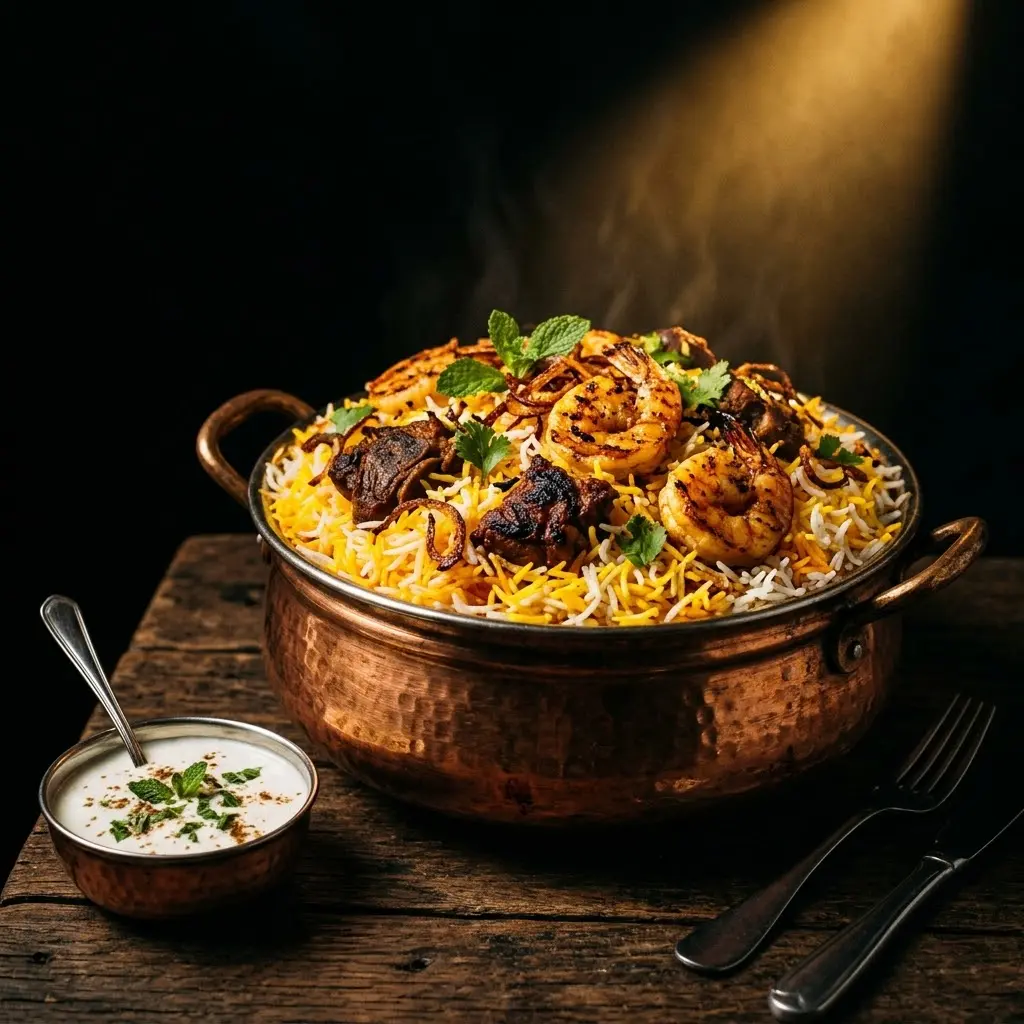
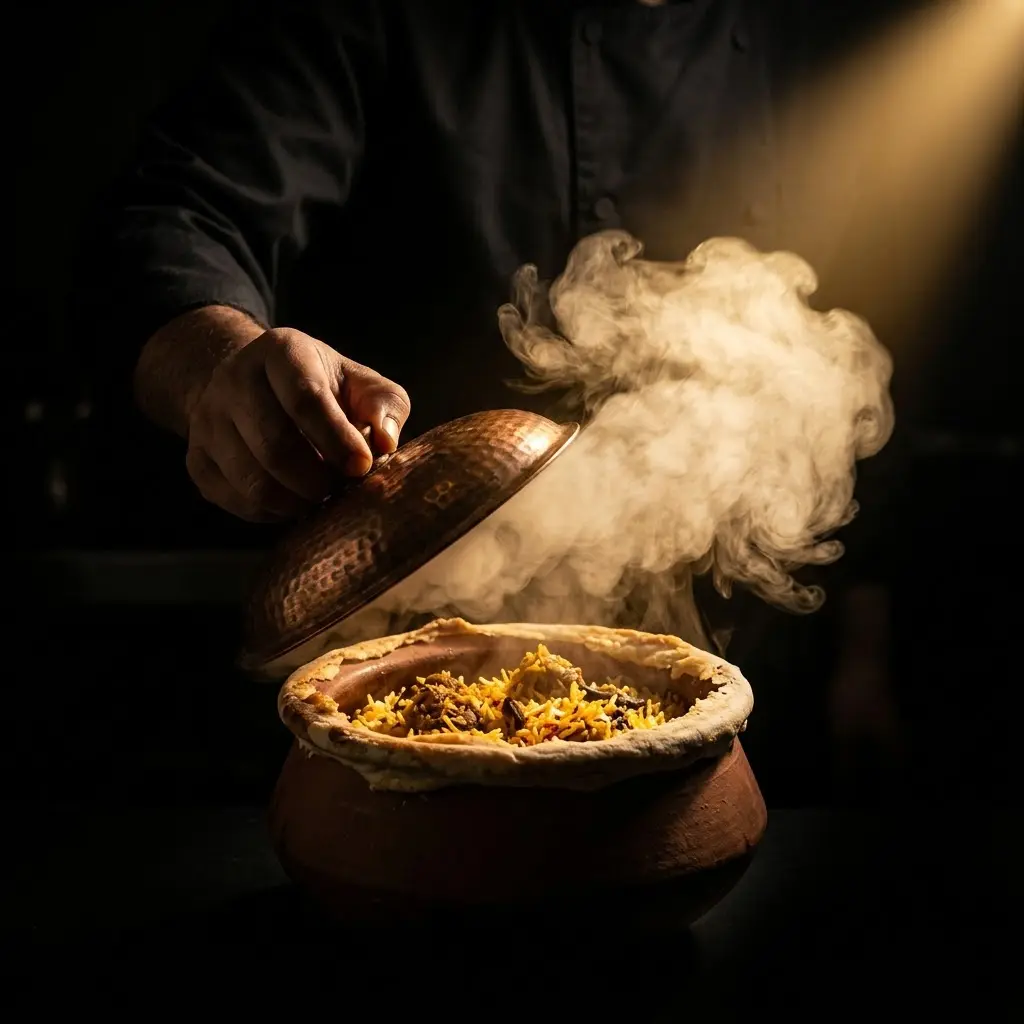
Biryani is arguably the most theatrical dish in Indian cuisine: a pot sealed with dough, set over gentle embers, opened at the moment of serving in a cloud of fragrant steam. Here's the story of a dish born at the crossroads of Persian and Mughal cuisine, its real cooking technique, and a few facts.
The origins of the dish
The word 'biryani' is thought to come from the Persian 'birinj' (rice) or the verb 'birian kardan' (to fry or roast before cooking) — two linguistic roots that reflect the dish well: rice, prepared in several stages before being assembled. Persian layered-rice cooking arrived in India via trade routes and the Mughal and sultanate courts, where it met local spices and techniques.
Hyderabad's version was born in the 18th century, when Asaf Jah I, a former Mughal governor, founded his own dynasty — the Nizams — and set up his court in Hyderabad. The royal cooks (khansamas) there fused the Mughal layered-rice technique with the spices and chili of local Telugu cuisine, giving rise to a spicier, more fragrant biryani than its northern Indian cousins.
This royal biryani stands out for its 'kacchi' ('raw') method: unlike the 'pakki' style (meat pre-cooked, then mixed with the rice), raw marinated meat is layered directly under the half-cooked rice here, and the whole thing cooks together — a riskier bet, requiring real skill to have both meat and rice cooked to perfection at the same time.
How it's made
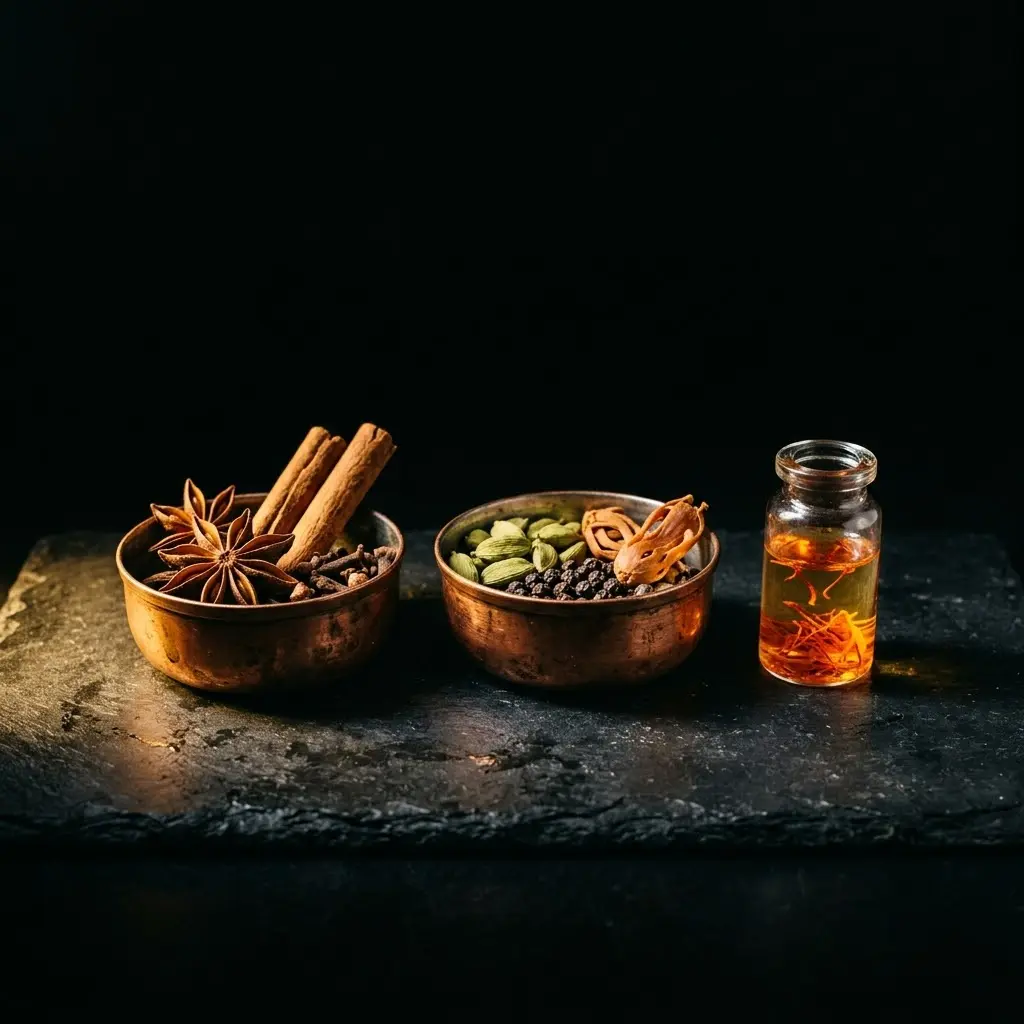
It all starts with a long marinade of the meat in yogurt, ginger, garlic and spices. The basmati rice is then cooked separately, only to the halfway point, in water fragranced with whole spices — cinnamon, star anise, cardamom, cloves.
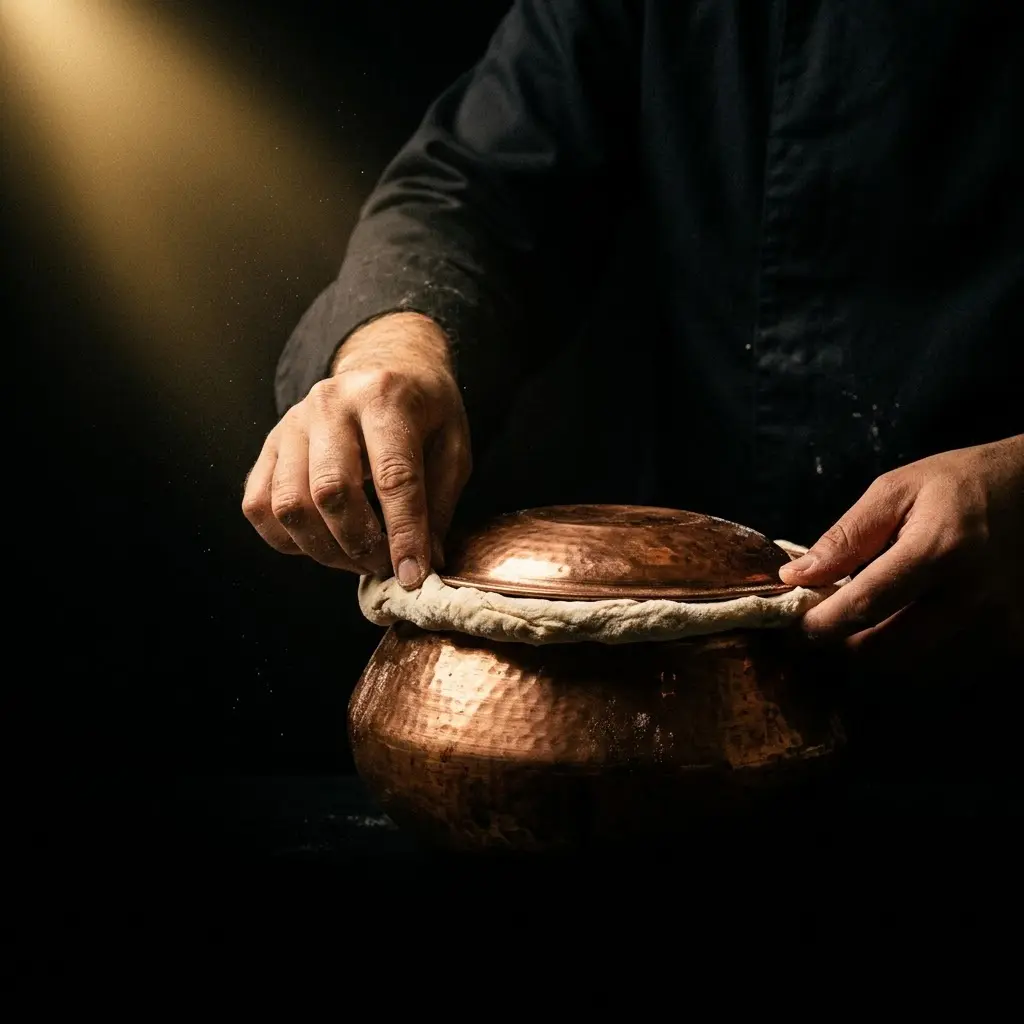
Next comes the assembly: the raw marinated meat at the bottom of the pot, the half-cooked rice on top, then a final layer of milk- or oil-infused saffron, fresh mint and coriander, and fried onions. The lid is sealed with a simple bread dough — this gesture, called 'dum', gives the technique its name: the steam stays entirely trapped inside.
The pot then cooks very slowly over low heat, sometimes over a bed of embers with coals placed on the lid — the trapped steam finishes cooking the meat and infuses every grain of rice. At Indian Flavors, every biryani is prepared and sealed to order following this same principle, never reheated.
Did you know?
- The gesture of sealing the pot with dough is called 'dum' — a word of Persian origin evoking breath: the steam is literally 'held' inside until the pot is opened.
- Biryani exists in many regional variants across India — Lucknow, Kolkata, Malabar, Sindh — each with its own spices and technique; the Hyderabadi version remains one of the best known worldwide.
- Originally prepared mainly with lamb or chicken in the Nizams' kitchens, biryani has since been widely adapted by region and taste — today at Indian Flavors, we prepare it with lamb, chicken, shrimp or fish.
- The 'dum' cooking technique isn't limited to biryani: it's used for many other slow-cooked dishes in Mughal cuisine, under the broader name 'dum pukht'.