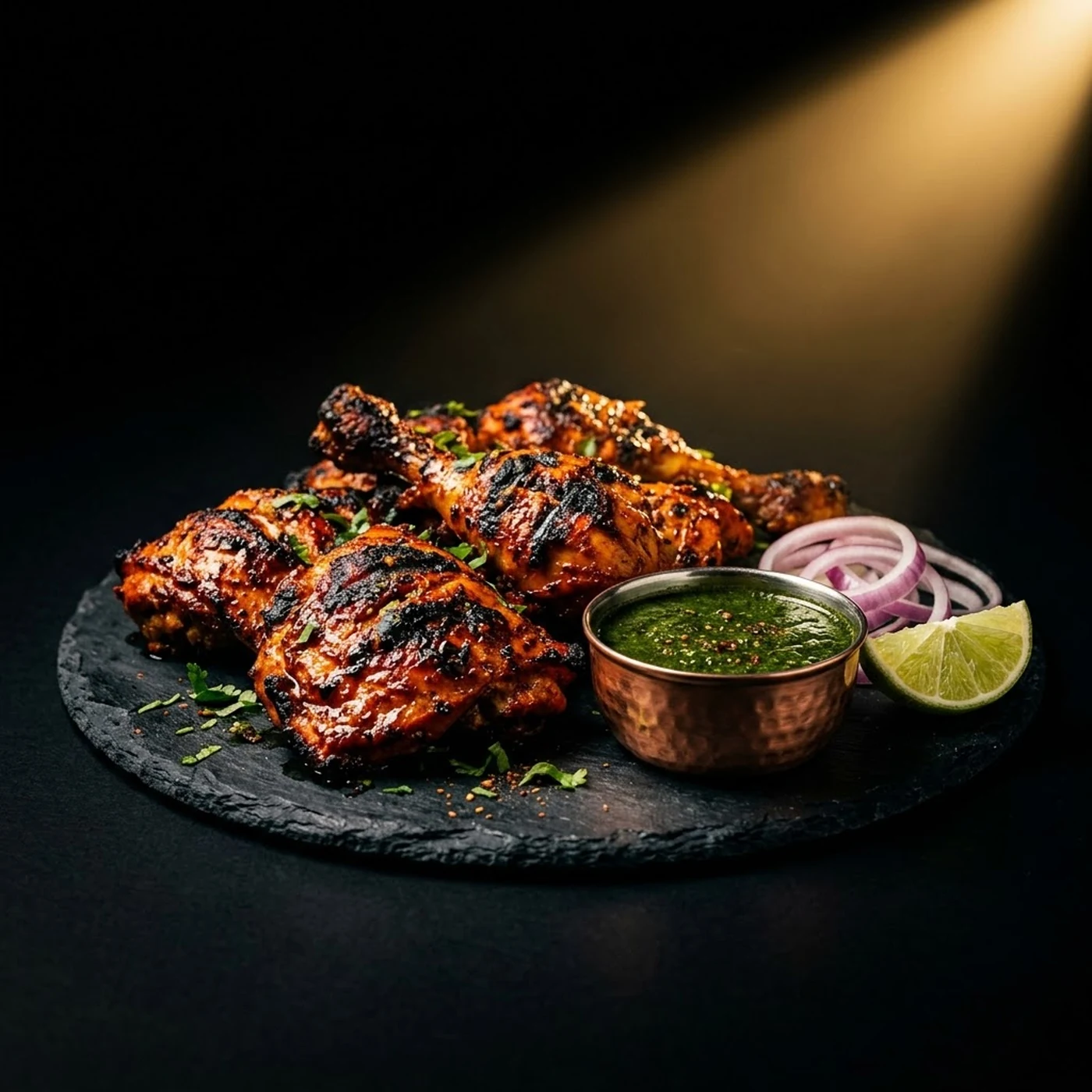
Tandoori chicken isn't just one of the world's most popular Indian dishes — it's also the dish that unintentionally led to the invention of butter chicken (read our dedicated article). Here's the story of a cooking experiment that became a global classic, its real recipe, and a few surprising facts.
The origins of the dish
The story begins in the 1920s, in Peshawar (now in Pakistan), at a small eatery called Moti Mahal, run by a man named Mokha Singh Lamba. A young cook named Kundan Lal Gujral already worked there — the same man who, decades later, would go on to invent butter chicken.
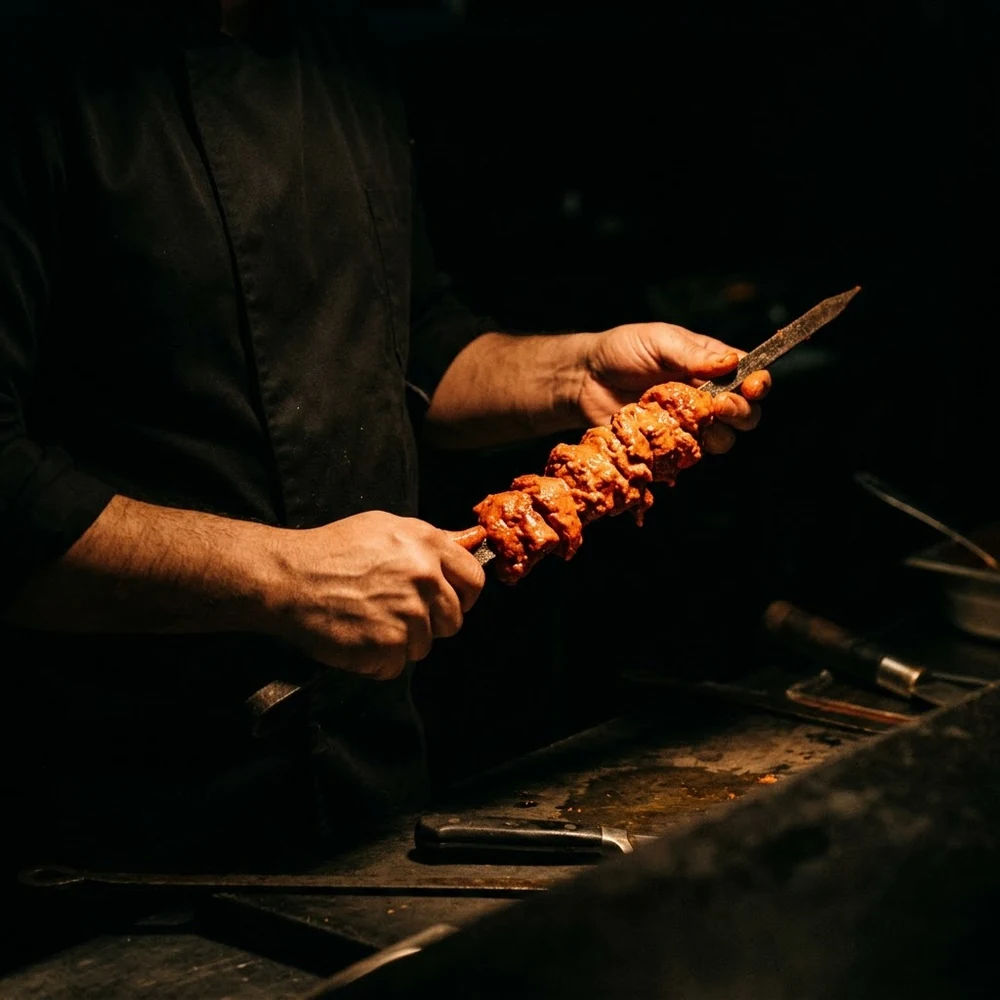
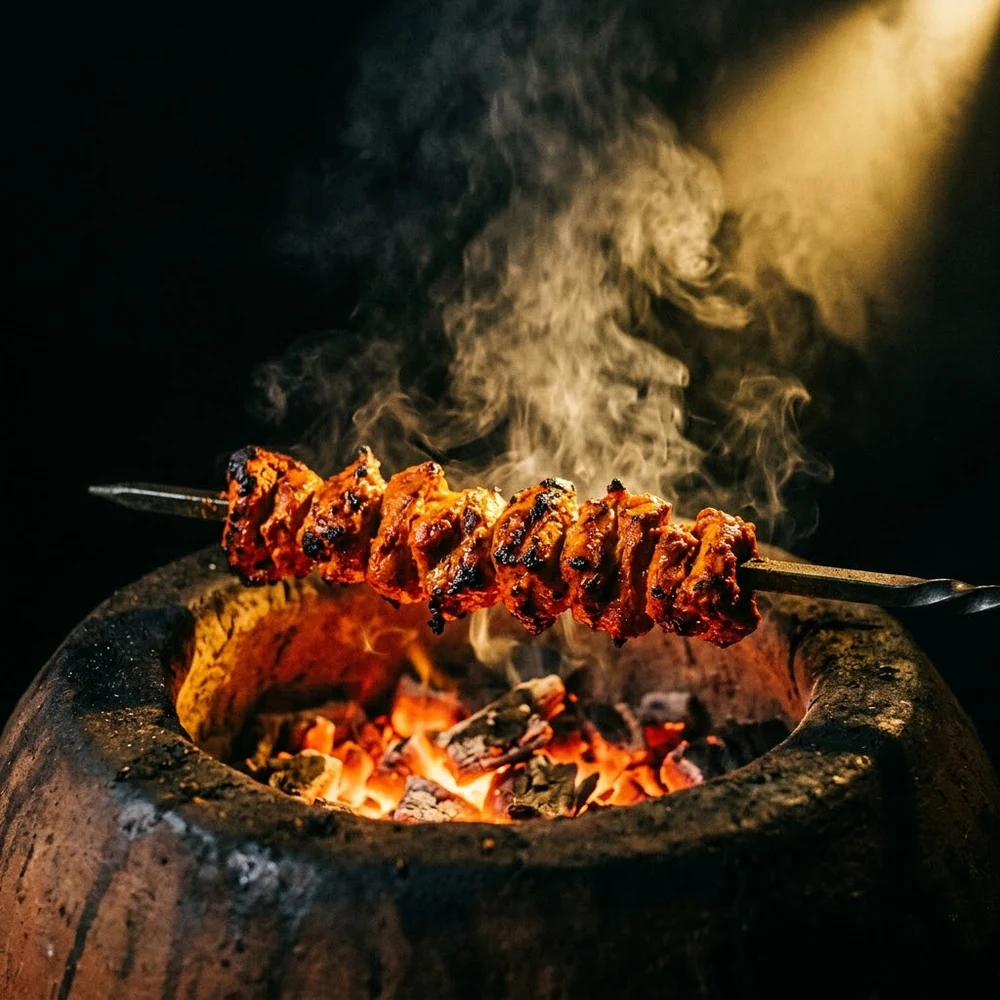
At the time, the tandoor — a clay oven heated with charcoal — was used only to bake bread, especially naan. Kundan Lal Gujral had the idea to cook something else in it: chicken pieces marinated in yogurt and spices, skewered and plunged into the oven's intense heat. The result — seared and lightly smoky on the outside, tender on the inside — had never been tasted before.
After the partition of India in 1947, Kundan Lal Gujral moved to Delhi and opened his own Moti Mahal in the Daryaganj neighborhood. It was there that tandoori chicken truly became famous — so much so that the restaurant was entrusted with preparing meals for India's very first Prime Minister, Jawaharlal Nehru, whose official residence was even fitted with its own tandoor oven to host visiting heads of state.
How it's made
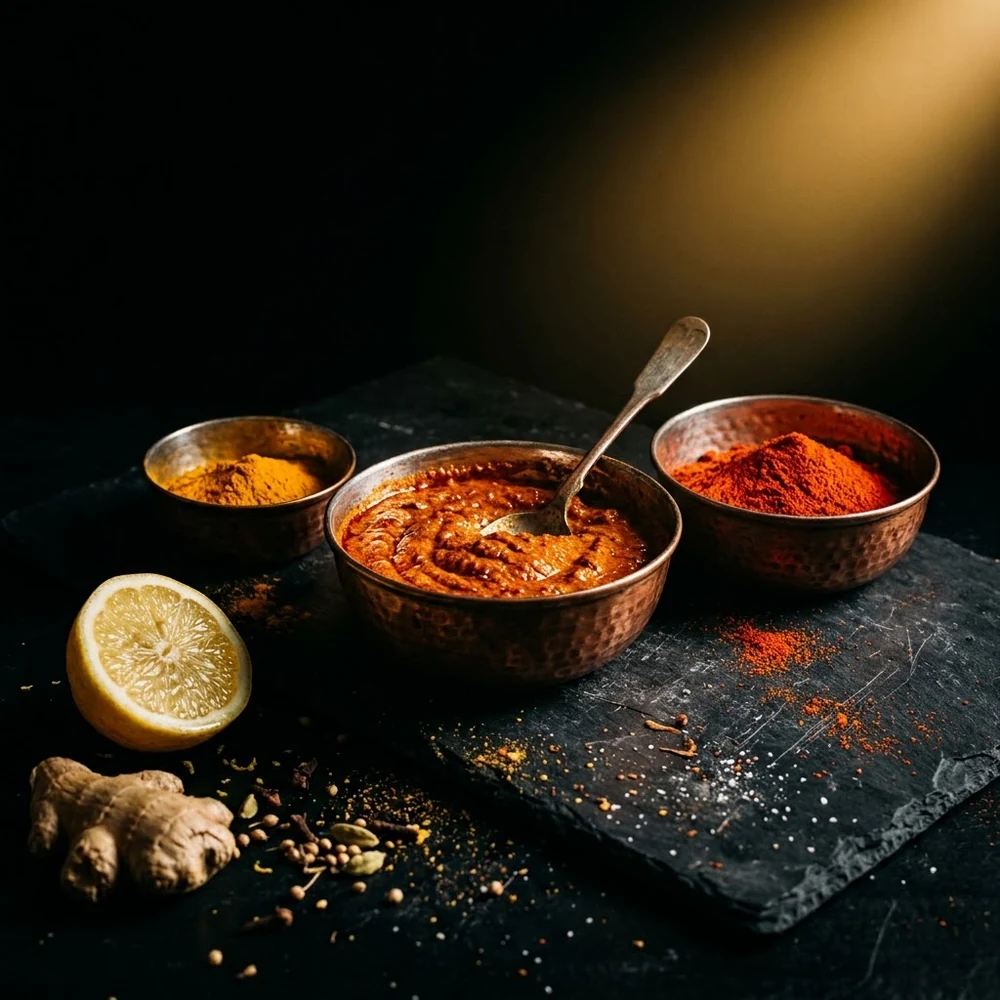
The recipe relies on a double marinade. First, a soak in lemon juice and salt, which tenderizes the meat and preps the fibers to absorb flavor. Then a second, longer marinade in a mix of thick yogurt, ginger, garlic and spices — paprika, cumin, coriander, garam masala — which gives the chicken its instantly recognizable red-orange color.
The pieces marinate for several hours, sometimes overnight, before being skewered vertically and cooked in the tandoor at over 400°C. This extremely fast, intense cooking seals in the juices while giving the skin the lightly smoky, slightly charred edge that is the dish's signature.
At Indian Flavors, our traditional charcoal-fired tandoor follows exactly this principle: every order is cooked fresh to the minute, never prepared in advance or reheated.
Did you know?
- The instantly recognizable red-orange of tandoori chicken doesn't come from a single ingredient: traditionally achieved with a touch of food coloring, it's most often recreated naturally today with paprika or Kashmiri chili.
- Tandoori chicken directly led to the invention of butter chicken: the latter was created to use up leftover tandoori chicken that was drying out in the kitchen — without this dish, the other probably wouldn't exist (read our article on butter chicken).
- In 1990, the Indian Association of Tour Operators (IATO) formally recognized Kundan Lal Gujral for inventing the dish — a rare honor for a cook.
- Delhi's Moti Mahal restaurant long prepared meals for Prime Minister Jawaharlal Nehru and his state guests, helping tandoori chicken become known far beyond India.